
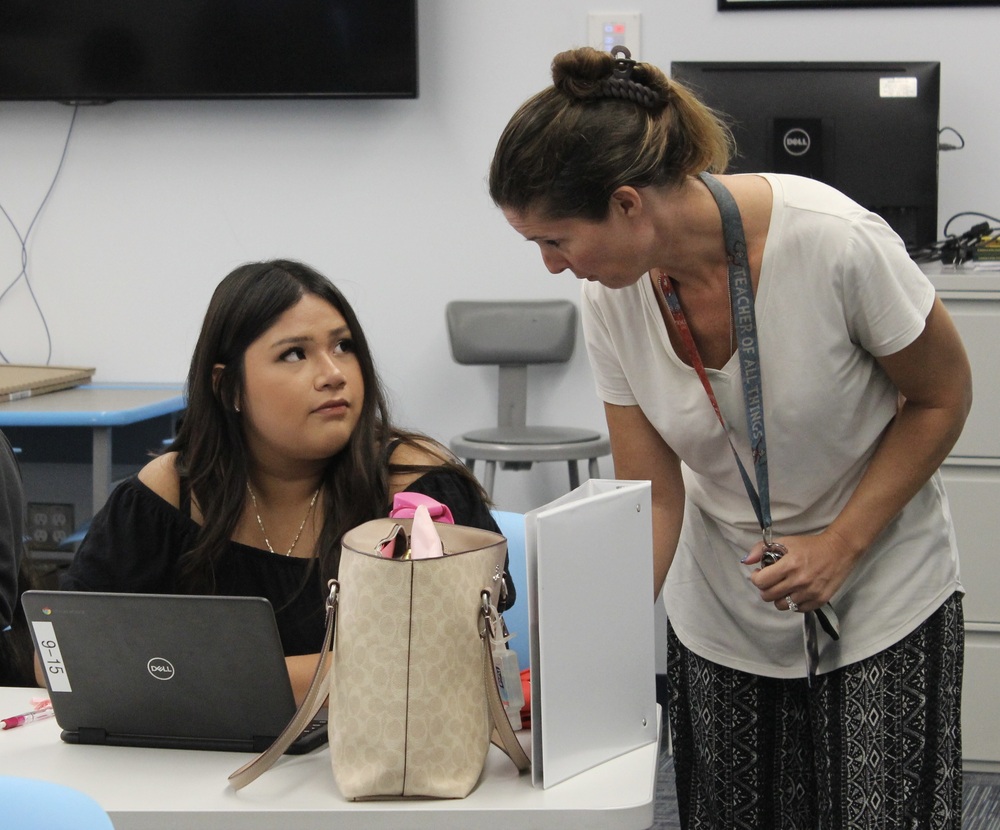
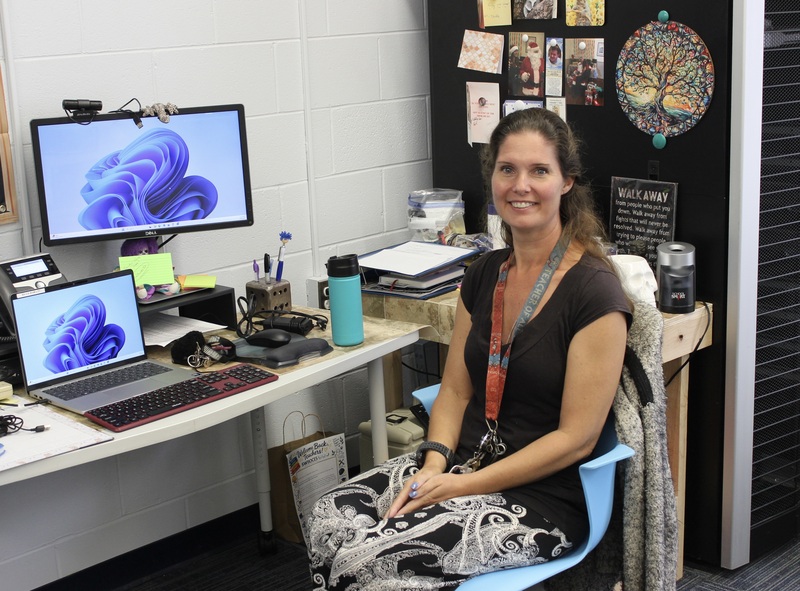
Ann LoBosco arrived at the Center for Career Services this summer with 25 years of experience as an educator. However, even she views the school’s new Pathways in Education program as a new venture for her and the school
She described the first-year program as unique, one that will offer students an opportunity to learn about a variety of paths in education while honing the skills vital to an educator.
 “I feel like this program was a really strong fit for me,” said Alexa Zhagy, a junior from Port Chester High School who jumped at the opportunity to enroll in the program. “Our teacher has explained how it can lead to jobs after college and even give us the skills to work in education while in school.”
The new, two-year program brings the school’s total to 22 Career and Technical Education programs, which serve students from Southern Westchester BOCES’ component districts. The school successfully debuted Welding and HVAC last year, and enrollment across campus has reached a record high of more than 900 students.
Alexa already serves as an assistant instructor teaching pottery classes and envisions herself working in early childhood development one day. But LoBosco’s curriculum, which she designed from scratch, will inform students about the role of administrators, counselors, and more. She counts 16 different identities under the umbrella of education. Students may be unfamiliar with many of them.
“Do you want to be a guidance counselor? Do you want to teach high school, middle school, elementary? Do you want to do pre-K? Do you want to skip over all of that and be an administrator?” LoBosco said. “You know, sometimes they don't realize that education has a huge, vast amount of people that create the student experience every day.”
Students will also learn about the history and philosophy of education, lesson planning, and the importance of differentiated instruction.
There will also be guest speakers and perhaps even opportunities to shadow educators. By the end of their second and final year in the program, she hopes students will complete DASA (Dignity for All Students Act) training and receive first-aid certification, putting them ahead of other high school graduates pursuing a career in education.
“They will be exposed to the fact that we're constantly learning, whether you're a guidance counselor all the way through to administration,” LoBosco said. “It's going to be a vigorous mix of writing, communicating, discussion, debates. We're going to have different types of students and different types of teachers when they get into the field, but I'm hoping to instill a passion for education and let them figure out what they love along the way.”